
Rectal pain or bleeding can be distressing, and it is completely natural to feel anxious or hesitant about seeking advice. Because anal fissures and haemorrhoids (piles) share overlapping symptoms, distinguishing between the two is an important first step toward effective relief.
Both conditions can cause:
- Bleeding after a bowel movement
- Discomfort or soreness around the anus
- Local irritation or itching
Because these symptoms are similar, many individuals assume they have piles when they may actually have a small tear, or vice versa. A professional medical assessment helps determine the precise cause, ensuring you receive the appropriate treatment, as care strategies for fissures and haemorrhoids differ significantly.
What Is an Anal Fissure?
An anal fissure is a small tear in the thin, moist lining of the anal canal (the final section of the bowel just inside the opening). It typically causes sharp pain during and after bowel movements, often accompanied by a small amount of bright red blood on the toilet paper.
A fissure commonly occurs after passing a hard or large stool, or following an episode of diarrhoea. The delicate lining stretches beyond its normal limit and splits.
Most fissures develop at the posterior midline (the back of the anal canal, closest to the tailbone). Once a tear forms, the surrounding internal anal sphincter muscle often spasms and tightens. This increased resting muscle tension reduces local blood supply, which can slow natural healing and explains why discomfort may linger as a dull ache for several hours after using the bathroom.
Anal fissures are common medical conditions and are not a reflection of personal hygiene or habits.
What Are Piles (Haemorrhoids)?
Haemorrhoids, commonly referred to as piles, are swollen blood vessels located within or around the anus and lower rectum. Normally, these vascular cushions assist with maintaining continence. Piles occur when these vessels become enlarged, stretched, or inflamed due to increased venous pressure.
Piles are categorised into two primary forms:
- Internal haemorrhoids: Form inside the lower rectum above the dentate line. They are typically painless because of limited nerve endings in this area, but they frequently present with painless, bright red bleeding during bowel movements.
- External haemorrhoids: Develop under the skin around the anal verge. They can be felt as small, soft swellings that may cause discomfort, swelling, or itching, particularly when sitting or cleaning the area.
Internal haemorrhoids are graded from I to IV based on degree of prolapse:
- Grade I: Prominent blood vessels that bleed but do not prolapse out of the anal opening.
- Grade II: Prolapse during straining or bowel movements but reduce (retract) spontaneously.
- Grade III: Prolapse during bowel movements and require manual replacement.
- Grade IV: Permanently prolapsed and cannot be manually reduced.
Confirming the precise grade assists your colorectal surgeon in recommending the most appropriate management plan.
Key Differences Between Piles and Fissures
| Feature | Anal Fissure | Haemorrhoids (Piles) |
|---|---|---|
| Primary symptoms | Sharp pain with bowel movements, anal spasm, small amounts of blood | Bleeding, itching, fullness, or a soft lump near the anal verge |
| Type of pain | Sharp, tearing, or burning sensation; can persist for hours post-bowel movement | Often painless if internal; dull ache or tender swelling if external or thrombosed |
| Type of bleeding | Bright red streaks on toilet paper or on the stool surface | Bright red blood that may coat the stool or drip into the toilet bowl |
| Common causes | Hard stools, excessive straining, diarrhoea, elevated sphincter tone | Chronic straining, constipation, prolonged sitting, pregnancy, low fibre intake |
| Physical appearance | Small linear cut or tear, occasionally with an adjacent skin tag (sentinel pile) | Soft vascular cushions or swollen lumps, located internally or around the anus |
| Typical location | Most commonly at the posterior midline of the anal canal | Lower rectum or under the skin surrounding the anal opening |
How the pain differs
Fissure pain is characteristically acute and directly provoked by bowel movements. Patients frequently describe a sensation similar to passing broken glass, followed by a persistent, burning ache driven by sphincter spasm.
In contrast, uncomplicated internal haemorrhoids are usually painless. Pain from haemorrhoids generally occurs only when external vessels swell significantly, or when a blood clot develops within an external pile (a thrombosed haemorrhoid), causing a firm, tender lump.
How the bleeding differs
While both conditions produce bright red blood, the presentation differs:
- Anal fissure: Bleeding is typically minor, appearing as distinct streaks on toilet paper or on the outer surface of a hard stool.
- Haemorrhoids: Bleeding can be more noticeable, often dripping into the toilet bowl independently of stool or coating the bowel movement without associated pain.
Any persistent or unexplained rectal bleeding should always be evaluated by a medical doctor to confirm the source.
Causes and triggers: fissures vs haemorrhoids
While constipation and straining contribute to both conditions, their underlying physiological mechanisms differ:
- Anal fissures are caused by mechanical stretching and trauma to the delicate anal mucosa, frequently exacerbated by an overly tight internal sphincter.
- Haemorrhoids arise from prolonged venous congestion and elevated pressure in the pelvis, causing the supportive tissue of the vascular cushions to stretch and weaken.
Can You Have Both an Anal Fissure and Haemorrhoids at the Same Time?
Yes, it is possible to have both conditions at the same time. They share risk factors, especially constipation and straining, so one can develop alongside the other.
Overlap can make symptoms harder to read. Bleeding may come from either condition, and pain from a fissure can hide the discomfort of piles. Treating only one problem may leave the other untreated, so symptoms may seem to continue despite your efforts.
A doctor can check the whole anal area and discuss a plan that addresses each condition.
How Are Anal Fissures and Haemorrhoids Diagnosed?
Diagnosis begins with a clinical discussion regarding your symptoms, medical history, and bowel habits, followed by a gentle visual examination. Examinations in clinic are conducted respectfully with privacy drapes provided throughout.
Visual inspection and clinical examination
Your doctor will first examine the perianal skin. External haemorrhoids, skin tags, and most anal fissures can be identified simply by gently parting the buttocks. If an acute, tender fissure is visible, digital rectal examinations are often deferred or conducted with topical local anaesthetic to minimise discomfort.
When tolerated and clinically indicated, an anoscopy, a brief examination using a small, lighted instrument, allows the surgeon to inspect the internal anal canal and accurately grade internal haemorrhoids.
When further investigations are recommended
If symptoms include altered bowel habits, dark blood, or unexplained weight loss, or if you are aged 50 and above, your specialist may recommend a colonoscopy. A colonoscopy allows direct visual evaluation of the entire large intestine to exclude other causes of rectal bleeding, such as polyps, inflammatory bowel disease, or colorectal cancer.
Treatment Options for Anal Fissures
Anal fissure management follows a conservative-first, stepwise pathway. Acute fissures often heal with non-surgical interventions, while chronic fissures may require targeted medical or surgical treatments.
Conservative care and lifestyle adjustments
The initial priority is preventing mechanical trauma during bowel movements:
- Increasing daily dietary fibre through vegetables, fruit, and wholegrains
- Maintaining adequate hydration throughout the day
- Avoiding prolonged straining or sitting on the toilet
- Using prescribed stool softeners where appropriate
Topical medications and sitz baths
A sitz bath, soaking the perianal area in warm water for 10 to 15 minutes twice daily and after bowel movements, helps soothe discomfort and relax sphincter tension.
Your doctor may also prescribe specialised topical ointments (such as glyceryl trinitrate or calcium channel blockers like diltiazem). These medications help relax the internal anal sphincter muscle, increasing local blood flow to promote tissue healing.
Procedural and surgical options
When a fissure persists beyond six to eight weeks despite conservative care, it is classified as chronic. Options include:
- Botulinum toxin injection: A targeted injection into the internal anal sphincter that temporarily reduces muscle spasm, allowing the fissure bed to heal.
- Lateral internal sphincterotomy (LIS): A precise surgical procedure that divides a small portion of the internal sphincter muscle to permanently alleviate chronic high pressure, supporting long-term healing in suitable candidates.
- Fissurectomy: Surgical removal of the fibrous, non-healing edges of a chronic fissure, occasionally paired with topical therapy or sphincterotomy.
Treatment Options for Haemorrhoids
Haemorrhoid care also follows a stepwise approach. The right treatment for piles depends on the grade, your symptoms and your preferences.
Lifestyle changes and over-the-counter remedies
For mild piles, simple changes that may reduce swelling and bleeding include:
- Increasing fibre and fluids to keep stools soft
- Avoiding straining or sitting on the toilet for long periods
- Taking warm sitz baths to soothe irritation
- Using pharmacy creams or suppositories (medicated inserts) for short-term relief, as advised by your doctor or pharmacist
These measures may ease symptoms but may not shrink larger piles.
Clinic-based procedures
When symptoms persist, short procedures at the clinic may help. Two examples are:
- Rubber band ligation: a tiny elastic band is placed at the base of an internal pile. This reduces its blood supply, and the pile may shrink and fall away over days.
- Laser treatment: a laser applies focused energy to shrink the pile. The aim is to reduce bleeding and swelling, and recovery varies between individuals.
Surgical approaches for advanced haemorrhoids
Preparing for piles surgery for extensive Grade III or IV haemorrhoids, or acutely thrombosed piles:
- Conventional haemorrhoidectomy: Excision of swollen vascular cushions; remains an established surgical approach for severe prolapse.
- Stapled haemorrhoidopexy: Lifts and secures prolapsed internal haemorrhoidal tissue back to its anatomical position.
- Laser haemorrhoidoplasty: Application of laser energy to shrink haemorrhoidal tissue from within, designed to minimise tissue trauma and support post-operative recovery.
Suitability for each approach depends on your clinical examination findings.
How Long Does Recovery Take After Treatment?
Recovery timelines depend on the specific intervention performed and individual healing rates.
| Treatment | Typical Recovery Period | Expected Sensation | Return to Normal Activities |
|---|---|---|---|
| Conservative care for fissures | Several weeks | Discomfort eases gradually as bowel motions soften | Immediate; daily routine continues |
| Conservative care for haemorrhoids | Days to a few weeks | Mild irritation or fullness settles over time | Immediate; daily routine continues |
| Lateral internal sphincterotomy | 1 to 2 weeks for initial healing | Mild to moderate soreness managed with oral pain relief | Typically within several days to 1 week |
| Rubber band ligation | 2 to 5 days | Mild dull ache or pelvic pressure for 24–48 hours | Typically within 1 to 2 days |
| Laser haemorrhoid treatment | Several days to 2 weeks | Mild to moderate soreness | Often within 3 to 7 days, depending on procedure extent |
| Conventional haemorrhoidectomy | 2 to 4 weeks | Moderate post-operative soreness requiring pain medication | Typically 1 to 2 weeks for desk work |
Practical recovery guidance
- Support bowel movements with adequate hydration, dietary fibre, and prescribed stool softeners to prevent straining.
- Perform warm sitz baths as advised by your surgical team, patting the area dry gently with a clean towel.
- Avoid heavy lifting or intense core exercises until cleared by your doctor.
- Contact your clinic promptly if you experience severe pain, heavy rectal bleeding, or fever.
When to Seek Professional Help
While many cases of piles and fissures are benign, certain symptoms require timely medical evaluation:
- Rectal bleeding that is persistent, heavy, or accompanied by blood clots
- Anal pain that worsens or persists for several weeks despite conservative measures
- A tender, firm, or enlarging lump near the anal opening
- Systemic signs such as fever, chills, or purulent drainage
- Any persistent change in bowel habits, such as unexplained diarrhoea, constipation, or narrowing of stools
Commonly Asked Questions
Is it normal to have bleeding during bowel movements?
While small amounts of bright red blood are common with haemorrhoids and fissures, rectal bleeding is never considered strictly normal. Any bleeding should be evaluated by a healthcare professional to confirm the source and exclude conditions of the large bowel.
How can I tell if I have a fissure or piles without seeing a doctor?
Sharp, knife-like pain during bowel movements that persists as an ache often suggests an anal fissure. Painless bleeding or a soft lump near the anal opening more commonly points to haemorrhoids. However, because both conditions frequently overlap and can mimic one another, a physical examination is the only reliable way to confirm the diagnosis.
Can anal fissures or haemorrhoids heal on their own?
Acute, superficial fissures and mild Grade I haemorrhoids can resolve with dietary adjustments, adequate hydration, and healthy toilet habits. Chronic fissures with muscle spasm or Grade III/IV prolapsed haemorrhoids generally require medical or procedural intervention to heal.
Does seeing a colorectal surgeon mean I will need surgery?
No. The majority of patients evaluated in colorectal clinics are successfully managed with conservative treatments, dietary guidance, topical medications, or simple clinic-based procedures. Surgery is reserved for cases that fail to respond to non-surgical methods or involve advanced structural changes.
Next Steps
If you are experiencing perianal discomfort or rectal bleeding, tracking your symptoms, including the nature of the pain, bleeding characteristics, and relation to bowel movements, provides valuable clinical information. If symptoms persist or cause significant discomfort, scheduling an evaluation with a colorectal surgeon can provide clarity and a personalised management plan.
Speak with a Colorectal Specialist in Singapore
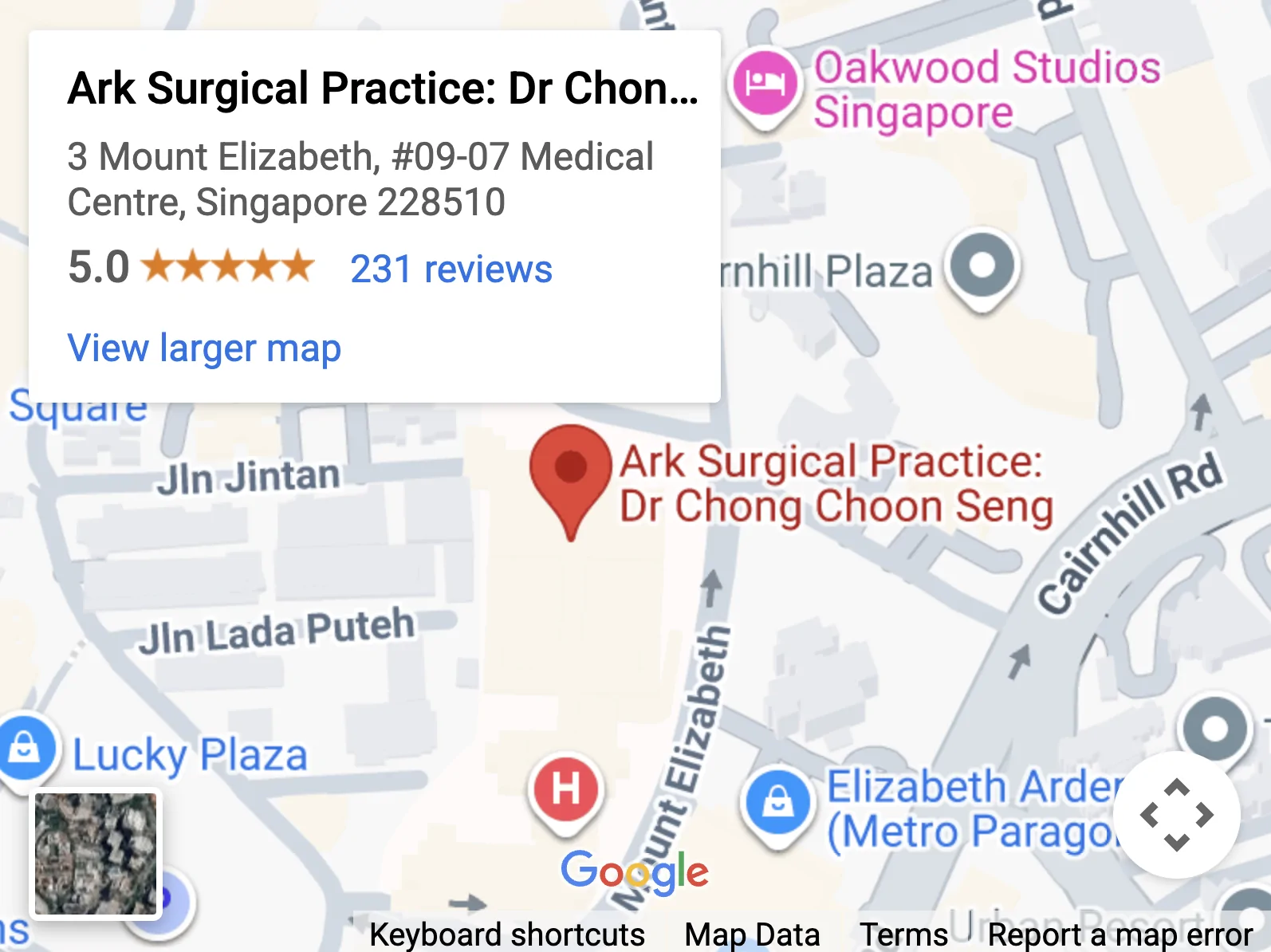
A consultation can help you understand your symptoms and your options. Whether the concern is anal fissure vs hemorrhoids or something else, the colorectal team at Ark Surgical Practice can assess you and explain the next steps. The practice focuses on minimally invasive approaches where appropriate, and the choice of treatment is discussed with you.