Painless rectal bleeding is frequently attributed to haemorrhoids, but assuming this without a proper medical investigation can dangerously delay the diagnosis of other serious conditions. While these vascular cushions are a common source of blood after a bowel movement, several alternative issues ranging from benign to severe can produce identical symptoms. Ultimately, the complete absence of pain provides vital diagnostic clues that require professional evaluation to ensure you receive the correct haemorrhoid treatment.
Characteristics of Haemorrhoid-Related Bleeding
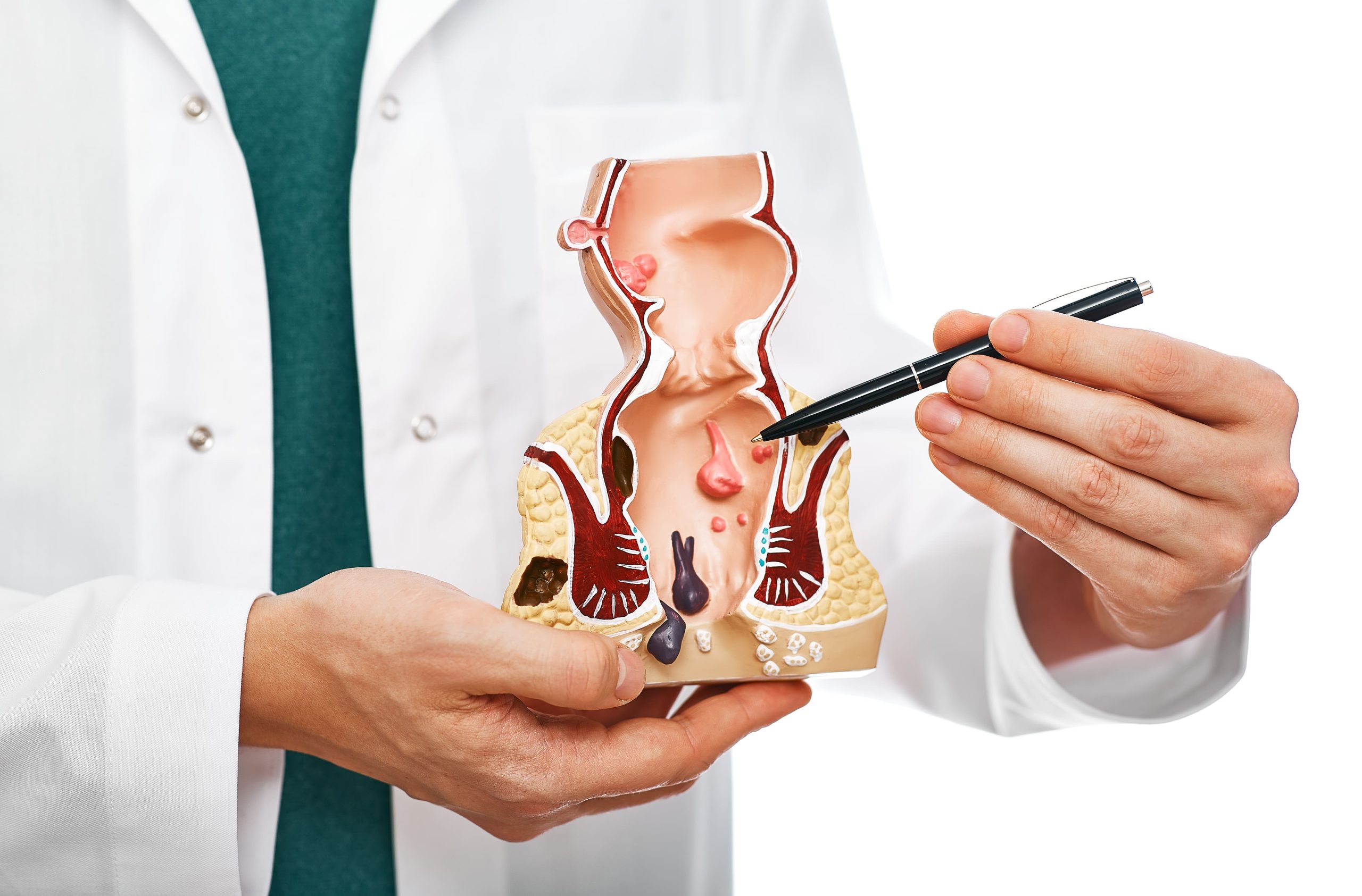
Internal haemorrhoids typically produce bright red blood that appears on toilet paper, drips into the bowl, or coats the surface of your stool. This bleeding generally occurs during or immediately after a bowel movement and is frequently triggered by straining or constipation. Because internal haemorrhoids lie above the dentate line and are innervated by visceral nerves rather than somatic pain-sensing nerve fibres, they bleed without pain in the absence of complications such as prolapse or thrombosis. They often respond well to simple dietary adjustments and improved hydration.
Other Causes of Painless Rectal Bleeding
While haemorrhoids are a frequent culprit, several other gastrointestinal conditions can cause painless rectal bleeding and require distinct medical approaches.
Anal Fissures in Chronic Phase
While acute tears cause sharp pain, chronic anal fissures that have been present for weeks can adapt to the irritation and bleed with minimal discomfort. This bright red blood mimics haemorrhoidal bleeding but is usually accompanied by a visible tear at the anal margin.
Colorectal Polyps
These tissue growths along the intestinal lining are often asymptomatic, but larger colorectal polyps can bleed intermittently, mixing red or darker blood into the stool. Identifying and removing them is critical because certain adenomatous polyps have the potential to progress into colorectal cancer over time.
Diverticular Bleeding
When the fragile blood vessels within small colon pouches rupture, it can cause a sudden onset of painless bleeding that is sometimes heavy enough to require hospitalisation. While this bleeding typically stops on its own, it carries a high tendency to recur in some individuals.
Angiodysplasia
Commonly associated with ageing, these abnormal, fragile blood vessel formations in the colon wall can lead to painless, intermittent bleeding. The blood loss can range from slow and chronic to sudden and brisk, often requiring specialised imaging to locate during an active episode.
Inflammatory Bowel Disease
Conditions like ulcerative colitis and Crohn’s disease can present with rectal bleeding as an early warning sign of digestive tract inflammation. Even though these diseases usually involve diarrhoea and cramping, some patients initially only notice blood streaked across or mixed into their stool.
Colorectal Cancer
In their early stages of colon cancer, tumours in the rectum or lower colon can bleed intermittently without causing any pain, perfectly mimicking a harmless haemorrhoid. Because the risk increases with age and early detection is vital, any unexplained or persistent bleeding warrants immediate professional investigation.
What Blood Characteristics Indicate
The appearance of blood provides clues about its source location within the digestive tract.
- Bright red blood on toilet paper or dripping into the bowl suggests a source near the anal opening — haemorrhoids, fissures, or low rectal lesions. The blood appears fresh because it has not travelled far or been exposed to digestive processes.
- Dark red blood mixed with stool indicates a source higher in the colon. The blood has had time to partially degrade during intestinal transit, changing its colour.
- Maroon or burgundy stools suggest bleeding from the upper colon or small intestine. This represents more significant bleeding that requires prompt evaluation.
- Black, tarry stools (melena) indicate bleeding from the stomach or upper small intestine. The blood turns black due to digestion by stomach acid and enzymes. This finding always requires urgent medical attention.
Risk Factors That Change the Clinical Picture
Certain factors increase the likelihood that rectal bleeding stems from something other than haemorrhoids:
- Age 50 and above raises the probability of polyps, diverticular disease, and colorectal cancer. Singapore’s national screening programme recommends that average-risk individuals begin colorectal cancer screening from age 50, using the annual Faecal Immunochemical Test (FIT) as the first step.
- Family history of colorectal cancer or polyps in first-degree relatives (parents, siblings, or children) increases personal risk. According to Singapore clinical guidelines, if a first-degree relative was diagnosed before the age of 60, or if two or more first-degree relatives have had colorectal cancer at any age, screening by colonoscopy is advised starting 10 years before the earliest family diagnosis or from age 40, whichever is earlier. Those with one first-degree relative diagnosed at age 60 or older should also begin screening from age 50 via colonoscopy every 10 years.
- Change in bowel habits accompanying bleeding — new constipation, diarrhoea, narrower stools, or sense of incomplete evacuation — suggests a process beyond simple haemorrhoids.
- Unintentional weight loss combined with rectal bleeding requires thorough investigation regardless of patient age.
- Iron deficiency anaemia without obvious cause may indicate chronic blood loss from the gastrointestinal tract, even when bleeding is not visibly apparent.
- Previous polyps or colorectal cancer increase the likelihood of recurrence, making new bleeding episodes significant.
Diagnostic Approaches
Healthcare providers utilise a variety of clinical examinations and specialised tests to accurately identify the underlying source of painless rectal bleeding.
Clinical Examination
During a physical assessment, a doctor performs a digital rectal examination to feel for abnormalities or haemorrhoidal prominence in the lower rectum. This is often paired with a proctoscopy, using a short, lighted instrument to directly visualise the anal canal and distal rectum.
Colonoscopy
This comprehensive procedure uses a flexible, camera-equipped scope to visualise the entire lining of the colon and rectum. It serves both diagnostic and therapeutic roles, allowing doctors to remove polyps and take tissue biopsies during the same session after a day of bowel preparation.
Flexible Sigmoidoscopy
This targeted, shorter endoscopic examination focuses exclusively on evaluating the rectum and the sigmoid colon. It is generally recommended when clinical symptoms strongly point to a lower gastrointestinal tract source in patients without broader risk factors.
Stool Tests
The Faecal Immunochemical Test (FIT) is used to detect hidden, microscopic blood within a provided stool sample. While a positive result indicates gastrointestinal bleeding that requires a follow-up colonoscopy, a negative result cannot completely rule out all underlying issues. In Singapore, FIT is the recommended first-line annual screening tool for average-risk individuals aged 50 and above.
Conservative Management for Confirmed Haemorrhoids
When healthcare providers confirm haemorrhoids as the bleeding source, initial management focuses on addressing underlying factors:
Dietary fibre intake should reach recommended daily amounts through vegetables, fruits, whole grains, and legumes. Fibre softens stool and adds bulk, reducing straining. A gradual increase in fibre prevents bloating and gas.
Fluid intake of at least six to eight glasses of water daily — as recommended by the Health Promotion Board — accompanies fibre supplementation to maintain soft, easy-to-pass stools. In Singapore’s humid climate, individuals who are physically active or spend time outdoors may need to increase their fluid intake accordingly. Inadequate fluids with high fibre can worsen constipation.
Toilet habits matter. Responding promptly to the urge to defecate, avoiding prolonged sitting on the toilet, and eliminating straining during bowel movements reduce haemorrhoid engorgement and bleeding.
Topical treatments including over-the-counter creams and suppositories provide symptomatic relief but do not address underlying haemorrhoid disease. Their role is supplementary to lifestyle measures.
Procedural Options for Persistent Haemorrhoid Bleeding
When conservative measures fail to control bleeding after several weeks, office-based procedures offer treatment options for grades I–III internal haemorrhoids.
- Rubber band ligation places small bands around the haemorrhoid base, cutting off blood supply. The banded tissue falls off within days. Multiple sessions may be needed for multiple haemorrhoids.
- Infrared coagulation uses heat to coagulate haemorrhoid tissue, causing it to shrink. This option suits smaller, bleeding haemorrhoids.
- Sclerotherapy involves injecting a solution that shrinks haemorrhoid tissue. It works well for smaller haemorrhoids and may require repeat treatments.
- Haemorrhoidal artery ligation locates and ties off the blood vessels feeding haemorrhoids using Doppler guidance, significantly reducing blood flow to the haemorrhoidal tissue.
- Surgical haemorrhoidectomy (a procedure where the doctor removes haemorrhoid tissue completely) is reserved for large, grade IV haemorrhoids or those failing office-based treatments.
When to Seek Professional Help
- Rectal bleeding persisting beyond two weeks despite dietary and lifestyle modifications
- First episode of rectal bleeding at age 50 or older, in line with Singapore’s national colorectal cancer screening guidelines for average-risk individuals
- Bleeding accompanied by a change in bowel habits lasting more than several weeks
- Dark red or maroon blood, or black tarry stools
- Bleeding with unintended weight loss
- Significant blood loss causing weakness or lightheadedness
- Family history of colorectal cancer or inflammatory bowel disease
- Previous history of polyps requiring new symptom evaluation
Commonly Asked Questions
Can stress cause rectal bleeding?
Stress does not directly cause rectal bleeding but can worsen conditions that bleed. Stress often disrupts bowel habits, leading to constipation or diarrhoea, which can aggravate haemorrhoids or irritate existing fissures. Managing stress benefits overall digestive health but should not be considered treatment for bleeding.
How long should I wait before seeing a doctor about painless rectal bleeding?
Brief, self-limited bleeding that resolves with improved bowel habits may not require immediate evaluation in younger individuals without risk factors. However, recurrent episodes, bleeding lasting beyond two weeks, or any bleeding in persons aged 50 or above warrants medical assessment.
Do haemorrhoids ever become cancerous?
Haemorrhoids do not transform into cancer. They are normal vascular cushions that become symptomatic when enlarged. However, haemorrhoids and colorectal cancer can occur simultaneously. Attributing bleeding to haemorrhoids without examination can miss concurrent pathology. This is why persistent bleeding deserves proper investigation.
Is bright red blood always less concerning than dark blood?
While bright red blood often indicates a source near the anus, colour alone does not determine seriousness. A bleeding rectal cancer can produce bright red blood indistinguishable from haemorrhoid bleeding. Conversely, minor bleeding from a fissure might occasionally appear darker. Blood characteristics inform evaluation but do not replace proper assessment.
Can diet changes alone stop haemorrhoid bleeding?
For many individuals with grade I or II internal haemorrhoids, dietary modifications that improve stool consistency and reduce straining can effectively control bleeding episodes. Success depends on consistent adherence to fibre and fluid recommendations. When bleeding continues despite genuine dietary improvement over several weeks, additional intervention may be needed.
Next Steps
Painless rectal bleeding should not be assumed to be haemorrhoids without proper evaluation — colorectal cancer and haemorrhoids can coexist and produce identical symptoms. If bleeding persists beyond two weeks, occurs for the first time at age 50 or older, or accompanies a change in bowel habits or unintentional weight loss, medical assessment is warranted. Stool blood colour provides directional clues but does not replace examination or endoscopic investigation.
If you are experiencing persistent rectal bleeding, a change in bowel habits alongside bleeding, or blood that is dark red, maroon, or black, consult a colorectal surgeon for evaluation.